INTERVIEW WITH EBOO PATEL
ANJUM NAIM
It is the office of director of Interfaith Youth Core, a Chicago based organization of youths having a desire to spread idea of religious pluralism with young people as its builder. And hanging on the wall is a well – known painting "Freedom of Worship", a masterpiece of Norman Rockwell, famous American painter of the first half of the 20th century. In the painting, four men and four women are shown praying and invoking the blessings of God. Everyone is praying in his or her own way. All of them – Catholics, Protestants, Jews, Colored and Whites – are standing shoulder – to – shoulder facing the same direction, comfortable with the presence of one another and yet apart.
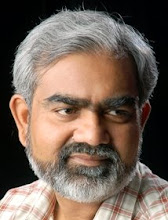
Eboo Patel, director of I F Y C says that it is a vivid depiction of a group living in peace with its diversity, yet not exploring it. It is what we have set as the goal of our endeavors: Persuading the youth of different faiths to respect each other and solve their problems shoulder – to – shoulder, is termed as 'Religious Pluralism' by Patel.
Patel migrated from Mumbai to America with his father in 1975; he graduated from university of Illinois at Urban Champaign, and thereafter, obtains his Doctorate in Sociology of Religious from Oxford University on Rhodes Scholarship.
Engaged in to imbibe the ingredients of spiritualism and dynamism in services to humanity, Patel is associated with the advisory board of the Council on Foreign Relations (C F R), an American non partisan foreign policy membership organization founded in 1921, considered as the most powerful private organization to influence United States Foreign Policy. It publishes the bimonthly general 'Foreign Affairs'. He is also associated with the advisory board of Duke University Islamic Studies Centre (D I S C) established in 2006, as a sequel to the Centre for the Study of Muslim Networks, especially educational networks as essential instruments for advancing cross – cultural understanding.
President Barrack Obama has recently, established 'White House Office of Faith – Based and Neighborhood Partnerships', which will work on behalf of Americans committed to improving their communities, no matter their religious or political beliefs. Eboo Patel has been nominated as its member. Published in 2007, his book 'Acts of Faith' is, in fact, a story of his own life journey and his vision in creating an inter – faith youth movement. It reflects his thoughts particularly, the religious pluralism and the role of youth in its dissemination and implementation.
When asked why does he want pluralism among religiously diverse young people. What does it mean to him, what does it mean to other Americans or Indians. Do most Americans agree with him that religious diversity is important? Why or why not?, Eboo Patel explains, "When I say the word “pluralism”, I mean that to build a peaceful world, we have to go beyond the fact of diversity to actually engage it. A scholar at Harvard University, Diana Eck, says, 'religious diversity is a given, but pluralism is an achievement.'"
Explaining religious pluralism, he says, "To me, religious pluralism is three things. First, there must be respect for religious identity, which includes respect for secular humanist and non-believing identities. Second, there must be mutually inspiring relationships between people of diverse faith traditions. Finally, religious pluralism must include common action for the common good. It is not enough that we identify the call to serve in different traditions - we must act upon that call together. Religiously diverse young people can build a movement together by seeking out one another, coming to know each other, and then acting together to serve their communities."
Most Americans, in his opinion, agree that religious pluralism is important, and he would go a step further and say that people in general tend towards pluralism. He thinks the missing link is that people need the framework, leadership skills, training and resources to build a pluralistic world, and that is what his organization, the Interfaith Youth Core, tries to provide.
Modus Operandi
Both, his message and movement gained popularity in the United States. He is wholeheartedly engaged in giving his message a rippling effect amidst restrictions and limitations. Narrating his all out efforts to expand his movement overseas, he says, "My organization works abroad through several channels. For example, during the last few weeks, two Interfaith Youth Core staff members, both Muslim women, embarked on a tour across Western Europe supported by the State Department. They will conduct trainings for young European interfaith leaders in Belgium, the Netherlands, Italy, Spain and France, with the goal of sparking an interfaith youth movement across Europe. Many of the communities they are visiting include recent Muslim immigrants to Western Europe, as well as established Muslim minority communities. "
According to him, this is just one of many partnerships IFYC has had with the State Department, which, over the past year, has meant IFYC presence in ten different countries. This includes the participation of four staff members on different speaking tours around the Philippines, India, and Western Europe. They are currently running three programs funded by the State Department - the Western Europe training tour will be followed in March by another training tour around the UK. In April, IFYC is bringing youth workers from the UK to the United States to experience the ways that dramatic religious diversity can be engaged in a vibrant civic sphere, and learn leadership techniques for their work.
He is looking forward to expanding their international work in Southeast Asia as well, and his upcoming work is one step in that direction.
Interfaith dialogue in a multi cultural society
Explaining the needs and significance of interfaith dialogue and related difficulties, Patel said, "In our globalized era, the world is smaller than ever before. The possibility of coming of age without encountering neighbors, classmates, teachers or friends of different faiths or cultures is narrowing more every year, and I think this kind of diverse, multi cultural society is the ideal place to hold interfaith dialogue. Interfaith dialogue and service is about taking the diversity at hand and transforming it into a new state of pluralism. "
In his opinion, the question at hand is not if dialogue can work in a multicultural society, because increasingly all societies are multicultural. The question is when are they going to take advantage of this ample opportunity worldwide to turn diversity into pluralism?
"We must engage these differences, build bridges between them and work together to achieve societies where common action leads to a better future for all", says Patel.
He believes that there will be no peace in the world without religious pluralism, and no religious pluralism without the leadership of young people. Young people today are growing up in the most globalized era in human history – they are truly the first interfaith generation.
That is why he says, "Faith formation for them is going to not only involve the question: 'What does it mean to be a Muslim?' It is going to have to include an additional element, 'What does it mean to be a Muslim in a community/country/world of Hindus, Christians, Jews, Buddhists, Sikhs, secular humanists, etc?' This interfaith generation is going to be asking a whole new set of questions about what it means to be young and religious in this day and age, and I hope that they will be able to answer this question by taking a leadership role in building pluralism."
When asked why he came India to participate/ organize in a religiously diverse young people leadership program and what kind of leaders he is looking for, he replied that he is looking for young people ready to build pluralism in their communities. Young leaders who want to reach out to others, build mutually respectful relationships and join in service with those who are different from them in order to serve the common good.
Source of inspiration
His inspiration for the work comes strongly from his grandmother, whom he visited in Mumbai when he was first beginning interfaith action.
"As I sat beside her in her home, she told me 45 years worth of stories of women that she put up in her home and helped get a fresh start – women who were abused, abandoned, out of work, out of hope, with no family or chance to begin again. When I asked her why she spent her life helping others get back on their feet, she said “I am a Muslim. That is what Muslims do.” And that is where I draw inspiration," says Patel.
Relevance of Martin Luther King Jr's in the present era.
He is deeply impressed by his mission. He says, "The Reverend Martin Luther King Jr’s non-violent movement is incredibly significant in our era, not only because of the immense power of non-violence as a mechanism of social justice, but because of how Dr. King came to understand non-violence: through an Indian Hindu."
Peeping into the history he narrates: In 1950, when King was a young student in a Christian seminary, he went to see a lecture on Mahatma Gandhi in Philadelphia. Learning about Gandhi’s Hindu-based satyagraha (soul force) movement to free India stirred something in King. He had always believed in the Christian ethic of nonviolence, but thought it was relevant only for personal relationships. He was amazed that Gandhi had made that ethic the basis of a successful social reform movement.
"Five years later, when King was named the leader of the Montgomery Improvement Association, he copied Gandhi’s approach in the Montgomery Bus Boycott. The people who marched with him called their movement 'Christian love', but King knew that it was a Hindu named Mahatma Gandhi who had, as he put it, 'furnished the method'", says Patel.
Describing King's speech in the church after returning from Montgomery, Patel says: "In 1959, as the civil rights movement was gaining ground, King went to India to study Gandhi’s legacy firsthand. He marveled at the religious diversity of the subcontinent, how Gandhi had brought people of all faiths and classes together to work nonviolently for freedom. When he returned to Montgomery, King got up in the pulpit of his church and spoke these words: “O God, our gracious heavenly father. We thank thee for the fact that you have defined men and women in all nations, in all cultures. We call you this name. Some call thee Allah, some call you Elohim. Some call you Jehovah, some call you Brahma. Some call you the Unmoved Mover.”
According to Patel, within King’s movement there are lessons beyond the impact of non-violent activism - lessons of respect for other faith traditions, lessons of mutually inspiring relationships between people of different religions, and lessons of deep understanding of the shared values between the world’s religions and how they can arouse common action.
Youth service
"In an era of global religious conflict, idealism has a new face: interfaith youth cooperation. The evening news features stories of young people killing each other to the soundtrack of prayer. Yet across the country and the world, young people of many faiths are coming together around the shared value of service," Patel explains.
In his opinion, they are changing the toxic conversation about religion and building the American dream of a place in which freedom for one relies on freedom for all. The watershed moment for their idealism has come: today’s young people will grow up under the leadership of Obama administration, in which civic engagement is supported in an unprecedented way.
"The call to national service is being heard loud and clear, and we at the Interfaith Youth Core look forward to not only inspiring young people to serve, but to empowering them to lead their peers in service as well," says Patel in a voice, full of confidence.
A member of the White House Council on Faith-Based and Neighborhood Partnerships And Council on foreign relations. When asked about the difference he made by being on the aforesaid committee, Patel replies that he is honored to have been named to the White House Council on Faith-Based and Neighborhood Partnerships, and looks forward to being able to shape a task force on interfaith cooperation. The Council was just recently formed and only 15 of the 25 members have been named.
"Though our work is just beginning, I see this as proof that the potential of faith-based groups to do good in this country has been recognized. I hope that my year on this council ends with the recognition that faith-based groups can do the most good when they work together," he said.
“I believe that the twenty first century will be shaped by the faith line’’
Putting forth an explanation to this idea, he says, "One hundred years ago, the great African American scholar W.E.B. DuBois famously said that "the problem of the twentieth century will be the problem of the color line" Most people assumed that the color line divided black and white. But Dr. Martin Luther King Jr. came around 60 years later and changed the paradigm. He suggested that the real dividing line wasn't between black and white, but between those who wanted to live together as brothers and those who wanted to perish together as fools. "
"I believe the 21st century will be dominated by the question of the faith line. Our first and most important challenge is to recognize that the faith line does not divide Muslims and Christians, Hindus and Buddhists or secularists from the faithful", says Patel
He thinks that the faith line separates religious totalitarians and religious pluralists. Religious totalitarians want a society where their group dominates and everyone else suffocates. Religious pluralists want a society where people from different backgrounds live in equal dignity and mutual loyalty.
"The first challenge of the faith line is that the pluralists are in the majority, and yet the totalitarians have succeeded in convincing us to be afraid of each other. The second challenge of the faith line is for those of us in the majority to stand up for our pluralist vision, to tell our story, to put the extremists back in their place: on the extremes," believes Patel.

 Review by:Anjum Naim